Saturday, 28 January 2012






Friday, 27 January 2012
Film Screenings
 The Japan Foundation is organizing regular film screenings from January to March 2012. Each month's films have a common theme connecting them. This is an attempt to introduce Indian audiences to the magic of Japanese cinema. The Venue for all these screenings shall be The Japan Foundation, (5A Ring Road, Lajpat Nagar-IV) and admission shall be free.
| Film | Director | Release | Screning Date |
|---|---|---|---|
| January Topic: Passion for Film | |||
| The Rainbow Seeker | Yoji Yamada | 1996 | January 24, 2012 |
| Fall Guy (KAMATA KOUSINKYOKU) | Kinji Fukasaku | 1982 | January 30, 2012 |
| February Topic: Special Feature on Hiroko Yakushimaru | |||
| TONDA KAPPURU | Shinji Somai | 1980 | February 18, 2012 |
| W's Tragedy | Shinichiro Sawai | 1984 | February 21, 2012 |
| March Topic: Dedicated Women | |||
| Appassionata | Sadao Nakajima | 1984 | March 5, 2012 |
| YUME-CHIYO NIKKI | Kiriro Urayama | 1985 | March 15, 2012 |
Theatre Workshop by Madoka Okada
By Manjari Kaul
On the 23rd of January, the Kaden Theatrical Art Company in association with Japan Foundation, New Delhi organized a workshop on Japanese theatrical techniques and stylistics. Madoka Okada, the co-director of the play 'Looking In & Out', staged at the 14th Bharat Rang Mahotsav conducted the workshop with two others from his theatre company.

The team displayed certain standard stances and movements of the classical Japanese dramas, Noh and Kabuki. The importance of channelizing the energy inside our bodies to observe those stances during performance was also discussed.

"It is important to make our bodies still. Stillness brings silence," said Okada.
The discussion on energy reminded me of a book by theatre researcher, Eugenio Barba, called A Dictionary of Theatre Anthropology: The Secret Art of the Performer in which the writer points out that in Noh, the term energy can be translated as 'ki-hai' which means the profound agreement (hai) of the spirit (ki) with the body. Spirit here is used in the sense of spirit as 'pnema', breath. The Sanskrit word, 'prana', points out Barba, is equivalent to 'ki-hai'.

That movement as well as stillness can be a visible form of language, was discussed. A gesture can be way of communicating a feeling, a mood or words. The performers presented snippets from their play 'Looking In & Out' to illustrate the concept of movement as visible language.

Emphasis was laid on concentration during performance. The mind should be able to concentrate in such a way that it can look at the body from outside it. To achieve balance in one's posture during dance and performance it is important to concentrate on the body's centre.

The Japanese tradition of voice control in a modern day context was discussed. Okada also spoke about how he deploys light as an element in his production that not just sets the mood and alters the perception of the scene but acts as a co actor in the play.

The informative and educative workshop culminated in the participants learning a few basic stances and movements of Classical Japanese theatre. The participants shared performance space with the experts to learn how to establish a well balanced yet fluid body during performance.
On the 23rd of January, the Kaden Theatrical Art Company in association with Japan Foundation, New Delhi organized a workshop on Japanese theatrical techniques and stylistics. Madoka Okada, the co-director of the play 'Looking In & Out', staged at the 14th Bharat Rang Mahotsav conducted the workshop with two others from his theatre company.

The team displayed certain standard stances and movements of the classical Japanese dramas, Noh and Kabuki. The importance of channelizing the energy inside our bodies to observe those stances during performance was also discussed.

"It is important to make our bodies still. Stillness brings silence," said Okada.
The discussion on energy reminded me of a book by theatre researcher, Eugenio Barba, called A Dictionary of Theatre Anthropology: The Secret Art of the Performer in which the writer points out that in Noh, the term energy can be translated as 'ki-hai' which means the profound agreement (hai) of the spirit (ki) with the body. Spirit here is used in the sense of spirit as 'pnema', breath. The Sanskrit word, 'prana', points out Barba, is equivalent to 'ki-hai'.

That movement as well as stillness can be a visible form of language, was discussed. A gesture can be way of communicating a feeling, a mood or words. The performers presented snippets from their play 'Looking In & Out' to illustrate the concept of movement as visible language.

Emphasis was laid on concentration during performance. The mind should be able to concentrate in such a way that it can look at the body from outside it. To achieve balance in one's posture during dance and performance it is important to concentrate on the body's centre.

The Japanese tradition of voice control in a modern day context was discussed. Okada also spoke about how he deploys light as an element in his production that not just sets the mood and alters the perception of the scene but acts as a co actor in the play.

The informative and educative workshop culminated in the participants learning a few basic stances and movements of Classical Japanese theatre. The participants shared performance space with the experts to learn how to establish a well balanced yet fluid body during performance.
Thursday, 26 January 2012
Opening of the show 'Journey to the West'
The show Journey the West opened to loud applause and much enthusiasm. Among the artists presenting their work at the exhibition are: Aki Yahata, Hiroharu Mori, Satoshi Hashimoto, Meiro Koizumi, Yuken Teruya and Aki Sasamoto.

Aki Yahata's work expressed the power of human emotion and contact that transcends the mainstream idea of communication through the spoken or written word. The artist's video work was about a blind man and a hearing impaired one engaged in finding ways to communicate with each other.
People jostled to watch the performance art piece, Cetrifugal March realised by Aki Sasamoto. The performance was about death, its significance in different cultural context. The artist toyed with the ideam of objects and people and how the legacy of the dead is carried on with objects associated with them. The concept was both absurd and humorous.
Hiroharu Mori expressed his preoccupation with dead in Workshop of Death in which actors were asked to imagine their own deaths and were filmed while they "lived" their own death. The video work brings out the social causes and perceptions of death due to different causes.
The evening culminated in a meeting of Japanese and Indian cuisine with sushi, tandoori paneer and special Japanese tea served to all the art enthusiasts present at Lalit Kala Academy.

Aki Yahata's work expressed the power of human emotion and contact that transcends the mainstream idea of communication through the spoken or written word. The artist's video work was about a blind man and a hearing impaired one engaged in finding ways to communicate with each other.
People jostled to watch the performance art piece, Cetrifugal March realised by Aki Sasamoto. The performance was about death, its significance in different cultural context. The artist toyed with the ideam of objects and people and how the legacy of the dead is carried on with objects associated with them. The concept was both absurd and humorous.
 |
| Aki Sasamoto performing Centrifugal March |
Hiroharu Mori expressed his preoccupation with dead in Workshop of Death in which actors were asked to imagine their own deaths and were filmed while they "lived" their own death. The video work brings out the social causes and perceptions of death due to different causes.
The evening culminated in a meeting of Japanese and Indian cuisine with sushi, tandoori paneer and special Japanese tea served to all the art enthusiasts present at Lalit Kala Academy.
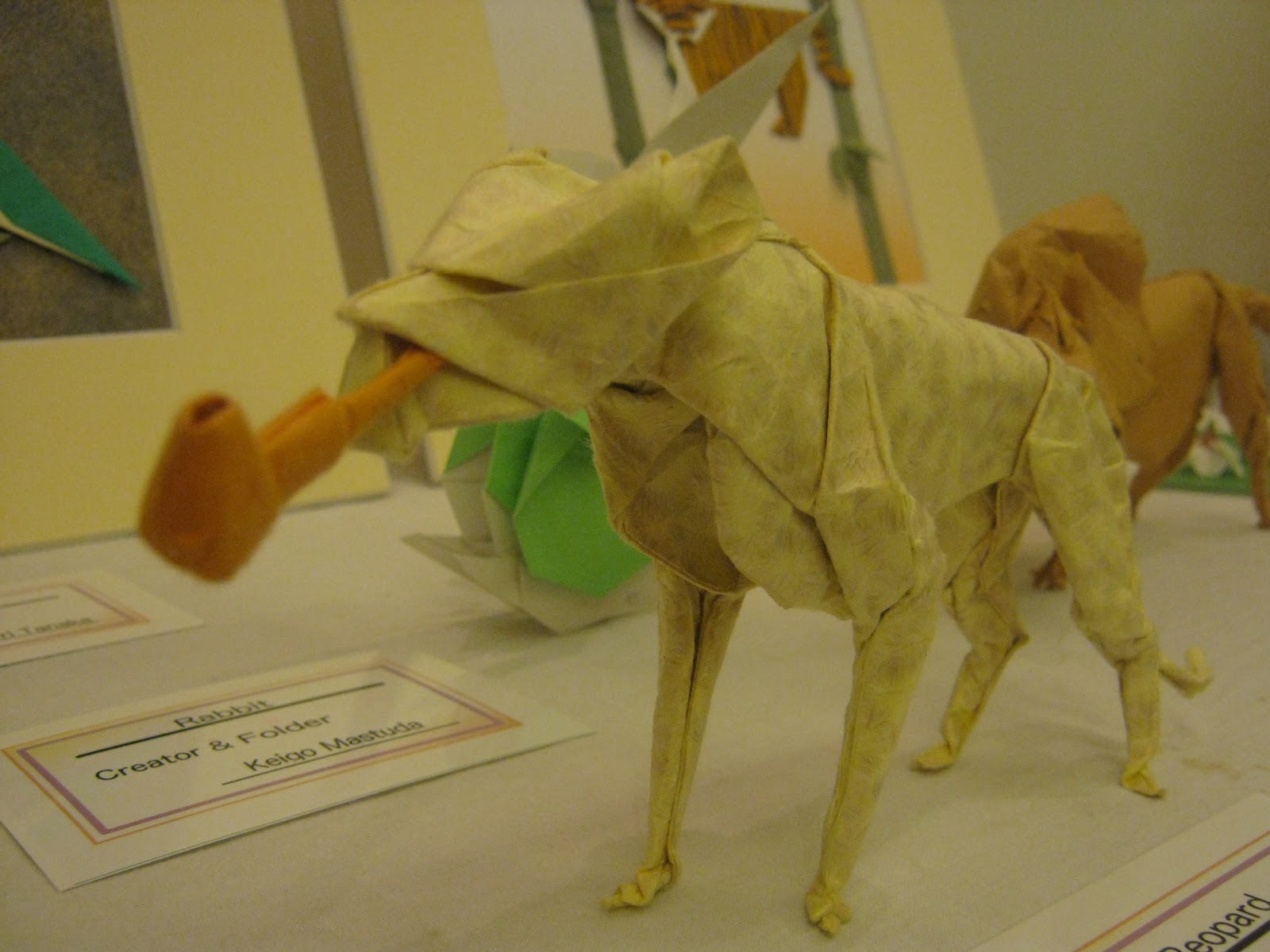
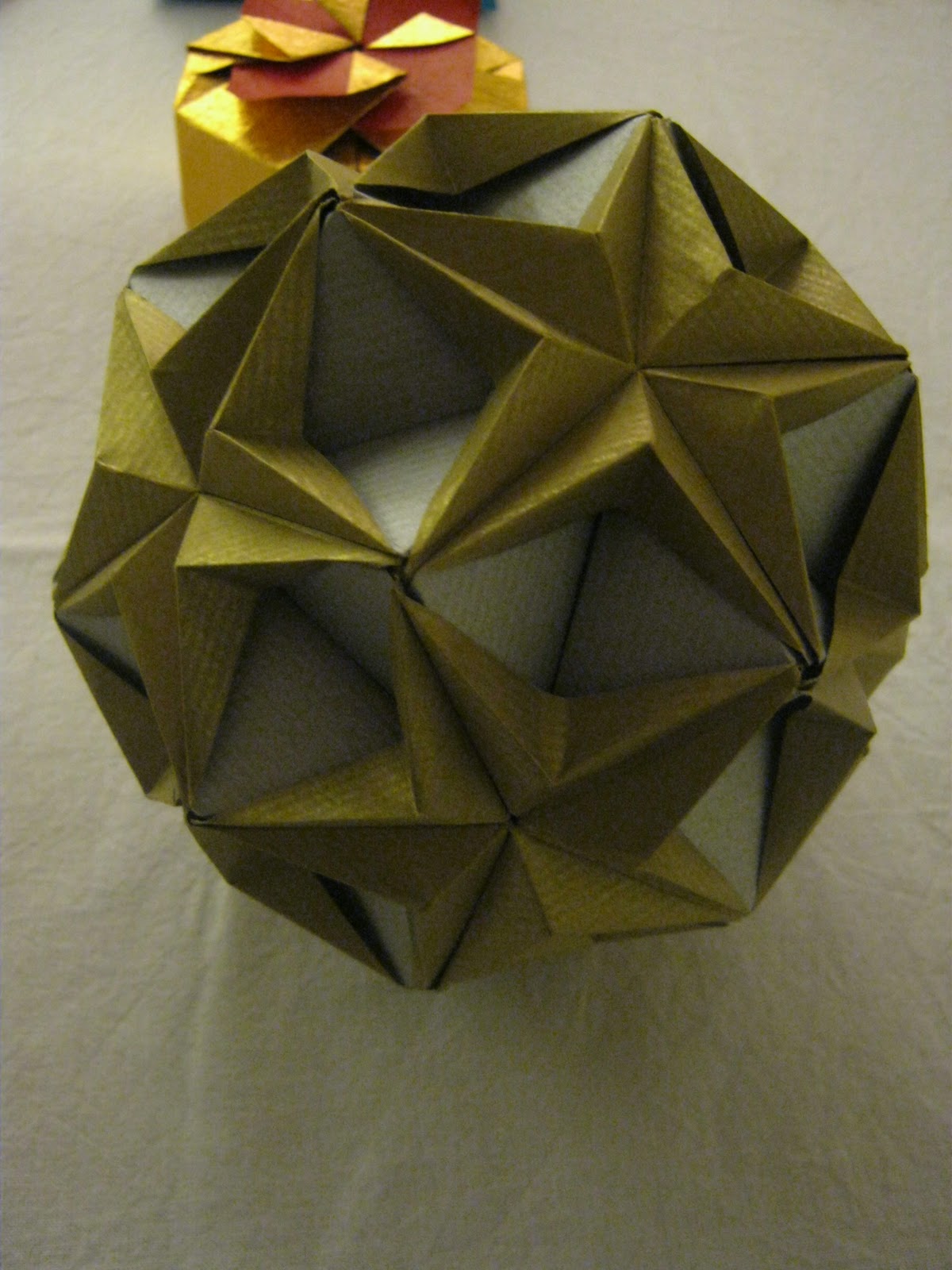
Folding is fun: Origami Workshops and Demostrations

Origami is the traditional Japanese art or technique of folding paper into forms of animals, plants, everyday items, and more. It is often done just for fun, but can also incorporate religious and ceremonial dimensions. In recent years, the artistic side of origami has been reassessed, giving rise to many exceptional works and new folding styles. Research is being done into the mathematics behind the geometric forms, as well.
In the coming days workshops will be conducted in different cities across India, in which three origami artists will teach the basics of folding to beginners and, at some venues, more advanced techniques to those at intermediate and advanced levels. Along with demonstrations, the artists will also introduce their own work and some relevant history.
Dates/Venues :
- January 21, 2012 (Oxford Bookstore, Kolkata) *Demonstration only
- January 25, 2012 (ABK-AOTS DOSOKAI,Tamilnadu Centre, Chennai)
- January 28, 2012 (Lotus Temple, New Delhi)*Registration is necessary to participate in the workshop
- Admission:
- Free
- Tel:
- 011-2644-2967 (The Japan Foundation, New Delhi)

Thursday, 19 January 2012
Journey to the West: Under construction
By Manjari Kaul

As I entered the premises of the exhibition space of Lalit Kala Academy I could sense the air of a zen like concentration mishmashed with an heady zeal and contemplative action. The artists displaying their works as part of the exhibition, Journey to the West that opens on the 21st of January, 2012, were preparing to put up their work. They were sawing wood, etching text on the wall, in deep discussion with the curators and pontificating over the look of their work, looking at it from various angles. I was made acutely aware of the air I breathed- the refreshing air of a creative outflow.
My sense of enrapture and eagerness to see the final show is expressed though this photo essay:
 |
| Tangled wires dangle |
 |
| Looking for the perfect angle |
 |
| Tie your shoe-laces |
 |
| Engrossed in work...The forgotten flasks of coffee |
 |
| Tools and ladder |
 |
| If all you have is a hammer, everything looks like a nail |
 |
| Waiting to be unrolled |
 |
| Paint splash |
 |
| Gateway to the "journey" |
Yoko Ono's Wish Tree
 By Manjari Kaul
The Wish Tree was inspired by Yoko Ono's childhood experience of visiting a temple in Japan where she would write a wish on a piece of paper and attach it to a tree branch. In this participatory art work she is inviting people to pen a wish and hang it from the tree. Yoko Ono has planted wish trees the world over. In Delhi, wish trees have been placed in various public places like schools, hospitals, art galleries and book stores. These wishes will be finally collected and sent to the IMAGINE PEACE TOWER in Iceland that hosts wishes of people around the world. The artist wishes a wish for peace and harmony through this simple and beautiful conceptual art work.
 |
| A wish for the earth |
 |
| Yoko Ono's wish for India |
Subscribe to:
Posts (Atom)